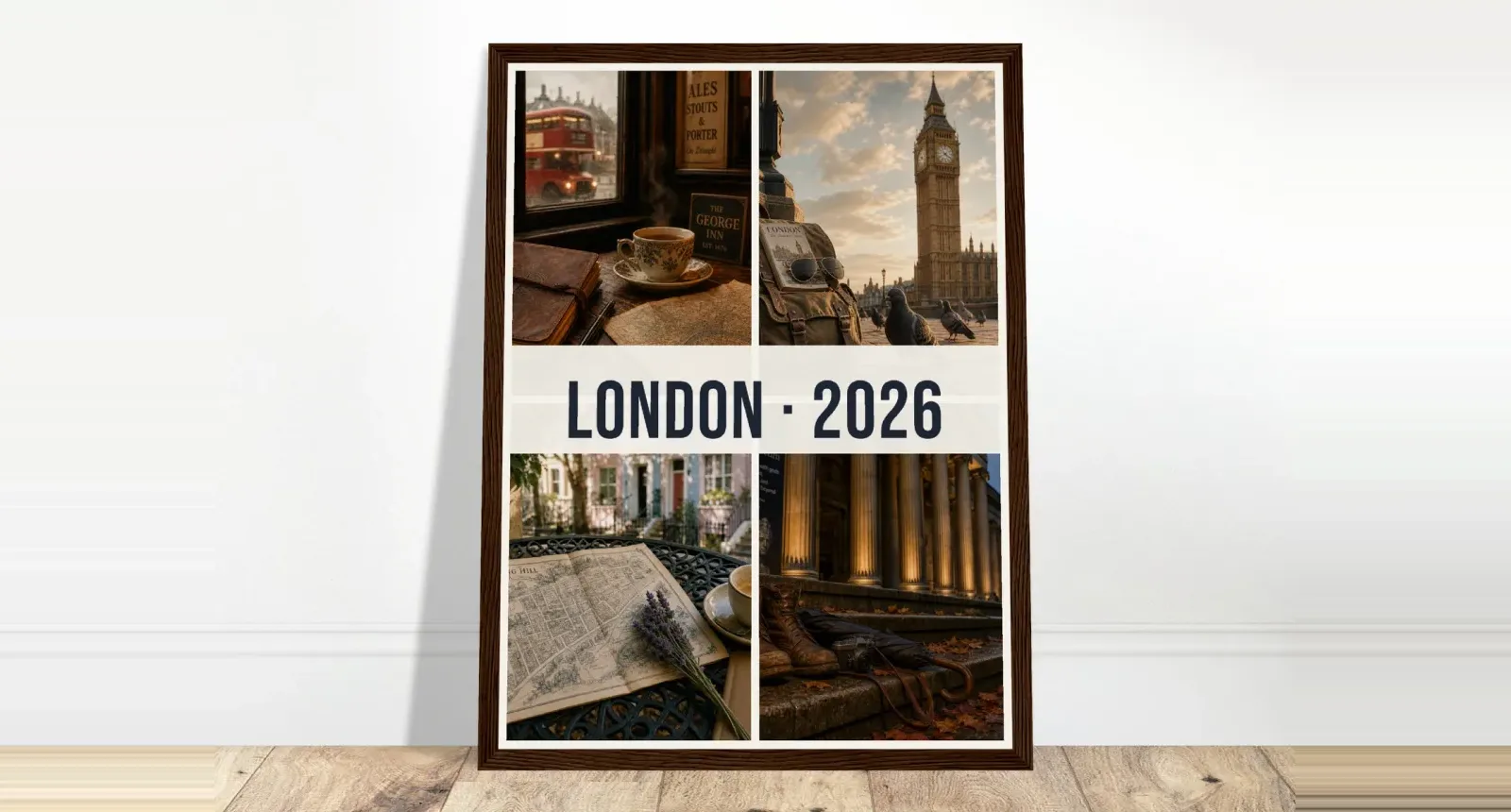
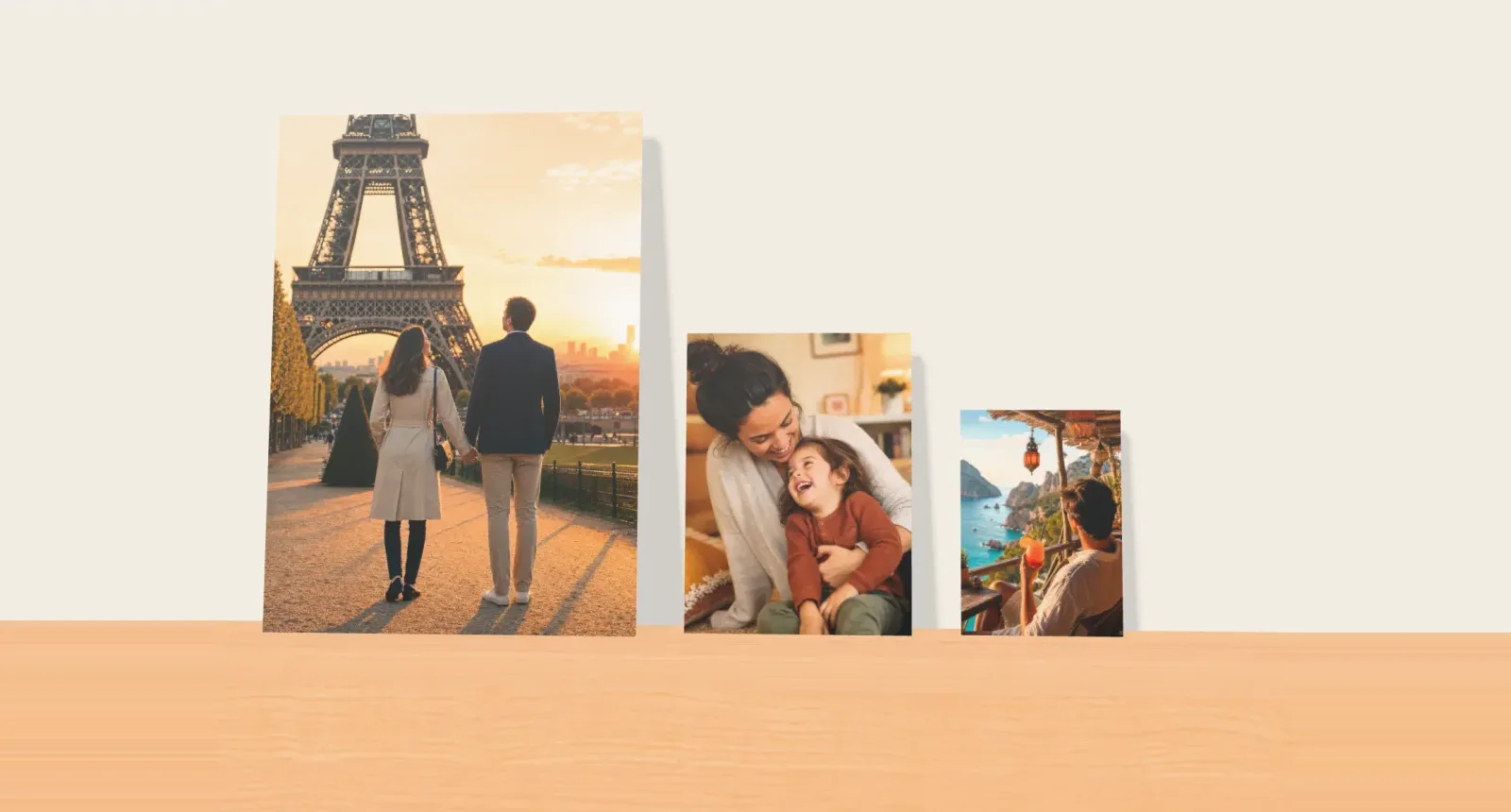
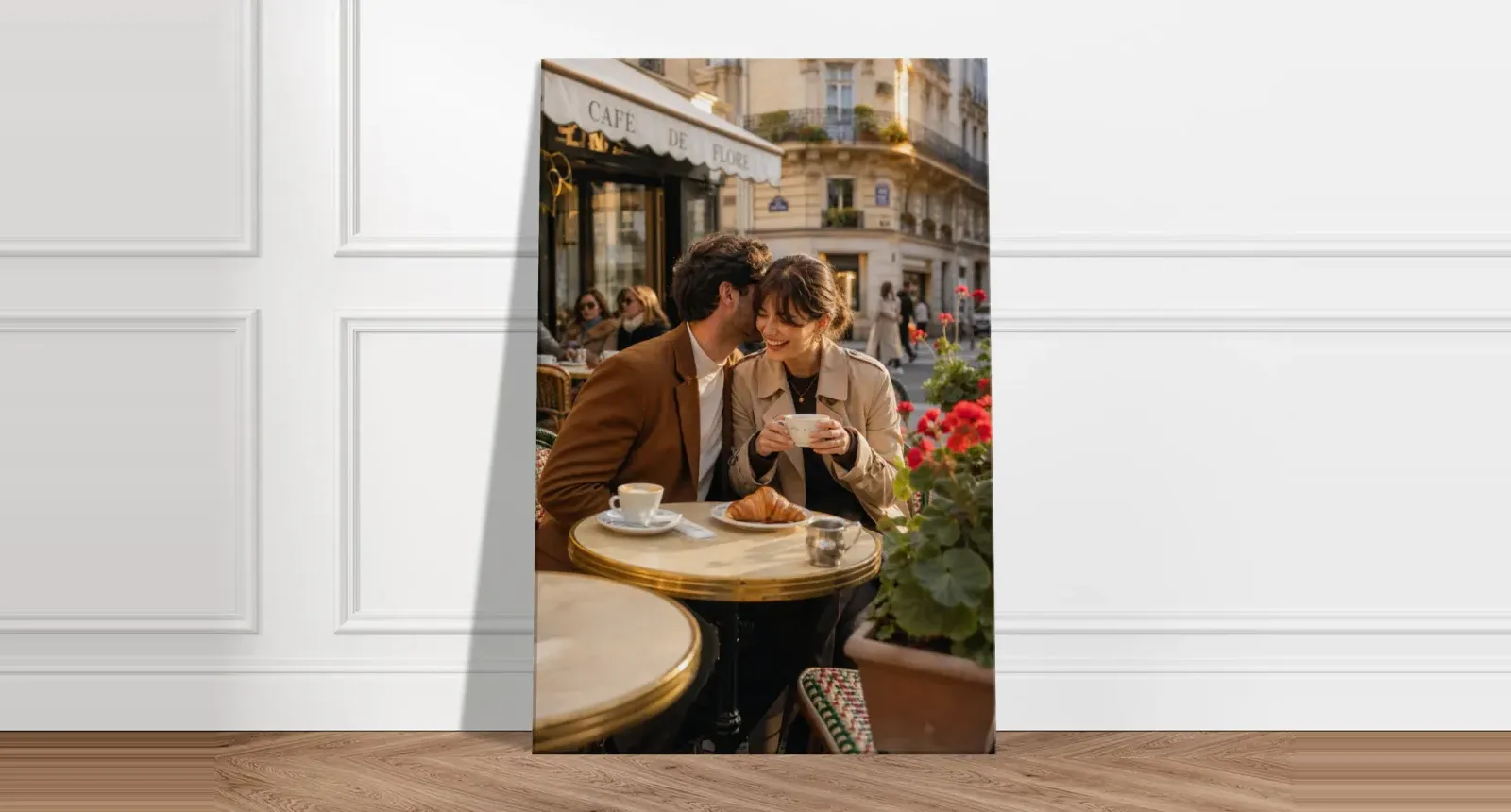
Framed Photo Prints: Framed Poster or Framed Canvas?
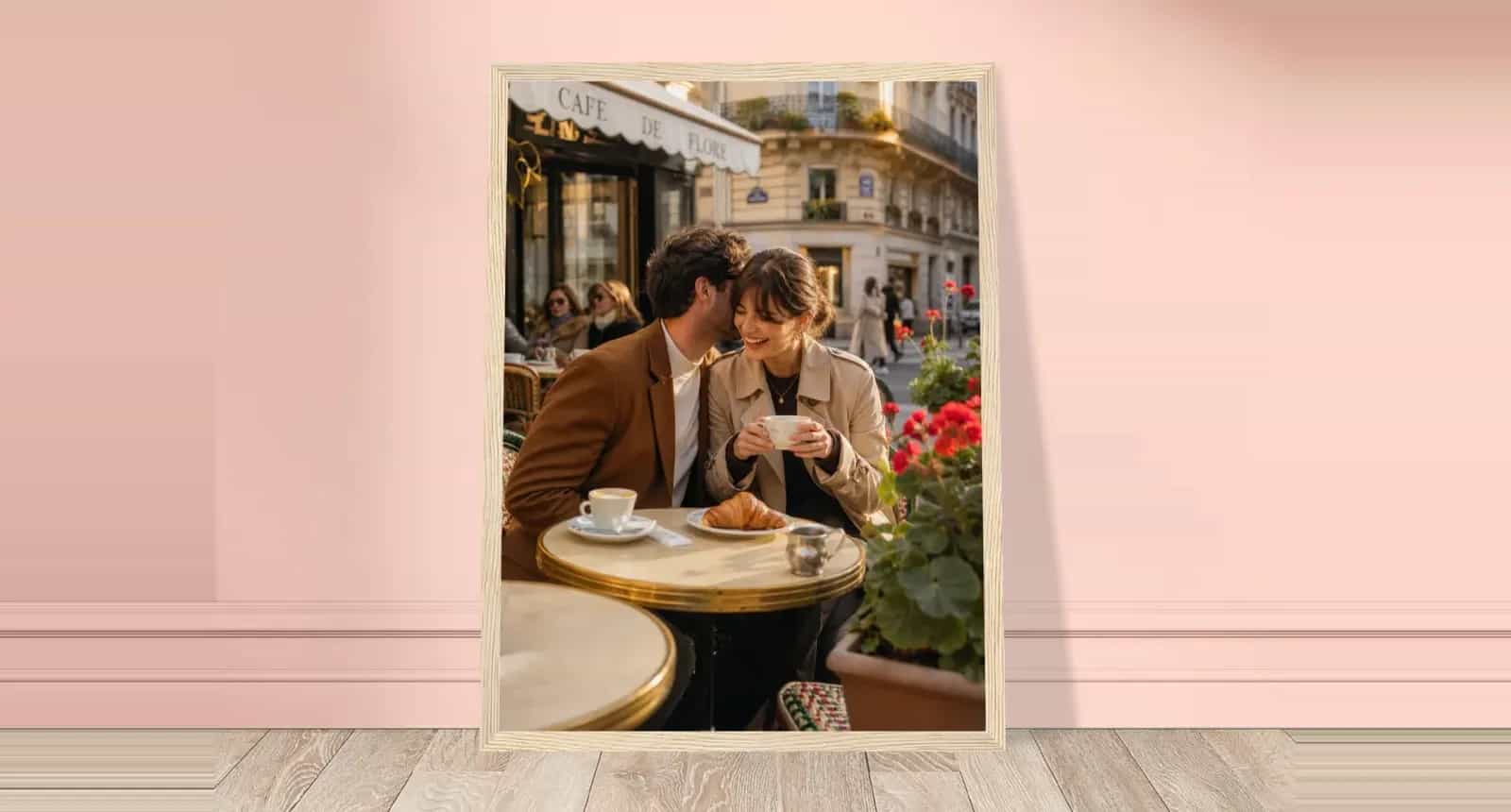
Printing a photo is easy. Finding a frame that fits, getting it home without breaking it, and lining the print up inside it is the part that leaves pictures in a drawer. Ordering framed photo prints solves that, because the print and frame arrive together, ready for the wall.
There’s still one real decision to make, and it changes how the finished picture looks: a poster behind plexiglass, or a canvas in a floating frame. This guide compares the two, then covers frame colours, sizes and the crop mistakes that a frame can cause.
Framed Poster or Framed Canvas?
Both arrive finished, with hanging hardware in place. The difference is what’s inside the frame.
Feature | Framed poster | Framed canvas |
|---|---|---|
What it is | Paper print behind plexiglass, in a wooden frame | Canvas stretched over a frame, set in a solid wood floating frame |
Look | Classic, crisp and picture-like | Soft, textured and gallery-like |
Surface | Smooth, with the shine of the plexiglass | Slight canvas texture, with nothing covering it |
Frame colours | Black, white, natural wood, dark wood | Black, natural wood, dark wood |
Frame depth | 22 mm deep, 12 mm wide at the front | 42 mm deep, 14 mm wide at the front |
Sizes | 13 × 18 cm up to 70 × 100 cm | 20 × 25 cm up to 60 × 90 cm |
Is any of the print covered? | About 5 mm along each edge | Nothing is covered |
As a simple rule, choose a framed poster for fine detail, sharp photos, small sizes and gallery walls with many pieces. Choose a framed canvas for one large piece with a warm, soft look, such as a family portrait or a landscape above a sofa.
How a Floating Frame Works
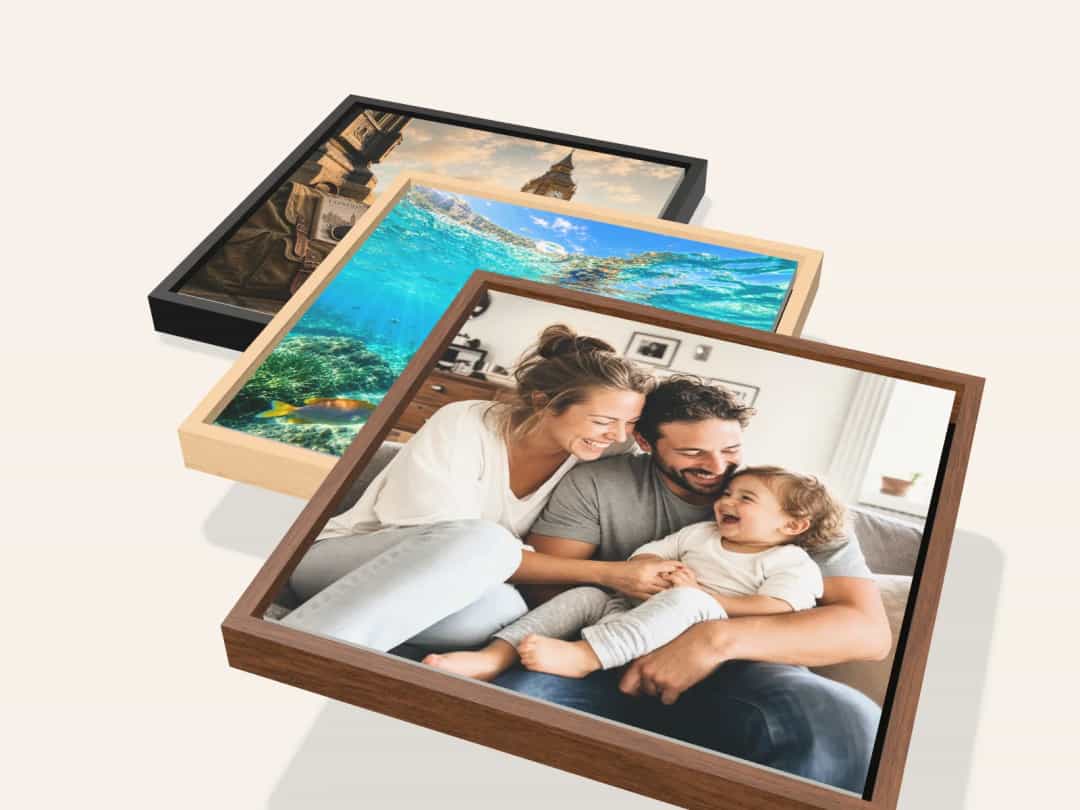
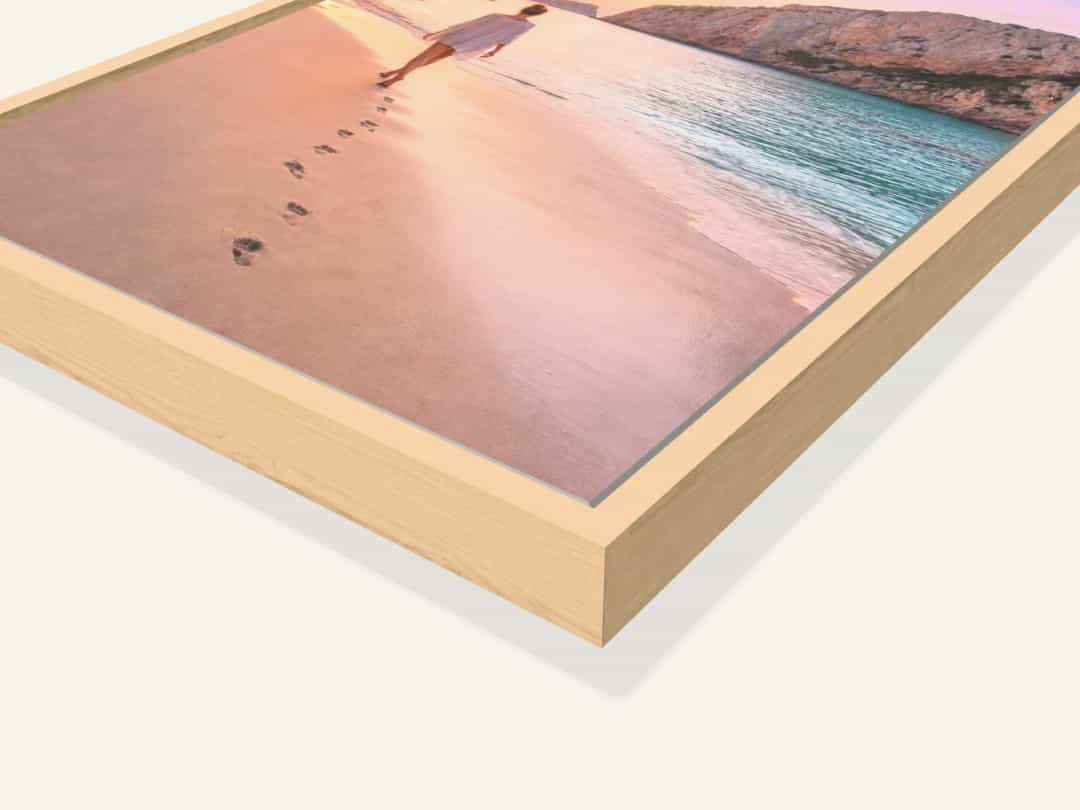
A floating frame doesn’t hold the canvas from the front. The canvas sits inside it with a slim gap all round, so it seems to hover in front of the frame, with a thin line of shadow around the picture. Nothing covers the print, so a 40 × 60 cm framed canvas shows the full 40 × 60 cm of your design.
Watch the Lip on a Framed Poster
A framed poster is different. The frame’s lip covers about 5 mm of the print along every edge, so the outermost part of your design won’t be visible. The editor shows a dashed line 5 mm in, and text and faces should stay inside it.
That also means there’s no passe-partout (mat) by default: your design fills the frame from edge to edge. If you’d like a white border around the photo, choose a white background and add a margin in the editor. It’s a simple way to make a small photo look more considered.
Choosing a Frame Colour
The frame should suit the photo and the room, and when they disagree, go with the photo.
Frame | Suits | Works well in |
|---|---|---|
Black | Black-and-white photos, strong contrast and city shots | Modern rooms and gallery walls |
White (framed poster only) | Bright, airy photos and soft colours | Light walls and bedrooms |
Natural wood | Warm family photos, beaches and summer colours | Scandinavian-style rooms |
Dark wood | Portraits, weddings, and rich, warm tones | Traditional rooms and darker walls |
If you’re still unsure, black is the safest choice for a set of mixed photos, because it holds them together. The 3D preview lets you see each colour with your own photo before you order. The price can differ slightly by colour, and the page always shows the price of the colour you picked.
Choosing the Size
Most people choose a frame that’s too small, especially for a single piece on a large wall.
Where it’s going | Try |
|---|---|
Shelf or desk | 13 × 18 to 20 × 25 cm |
Part of a gallery wall | Mix 20 × 25, 30 × 40 and 40 × 50 cm |
Beside a door or in a hallway | 30 × 40 to 40 × 60 cm |
Above a bed or a sideboard | 50 × 70 to 60 × 90 cm |
Above a large sofa | 70 × 100 cm |
To test a size, tape a sheet of paper or cardboard of the same dimensions to the wall and live with it for a day. Remember that the frame adds a little to the outer size.
Building a Framed Photo Wall
A framed photo wall looks planned when it has one thing in common across every piece. Pick at least one of these and stick to it:
The same frame colour: the easiest way to bring mixed photos together.
The same type of photo: all black and white, for example, or all from one trip.
The same gaps: about 5 cm between frames looks tidy on most walls.
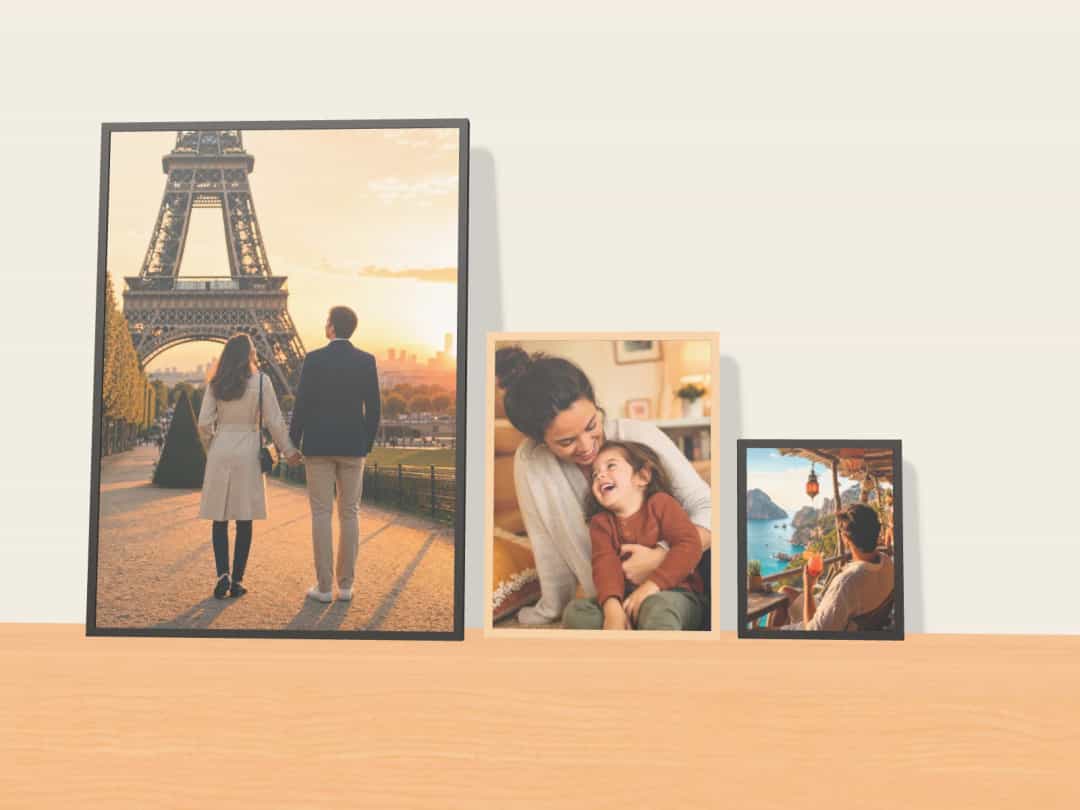
Lay the frames out on the floor before you put a single nail in the wall. Start with your largest piece near the centre, at about eye level, and work outwards. Framed posters suit this best, as the sizes run so small, and frames from one range will match. For more on planning a wall, see these personalised photo wall art ideas and this guide to turning pictures into wall art.
Is Plexiglass as Good as Glass?
Framed posters use plexiglass rather than real glass. It looks similar, but it’s lighter and shatter-proof, which makes it safer to ship and to hang in a child’s room or a busy hallway. The paper behind it is a premium semi-gloss 200 g stock, mounted flat in the frame, so it stays smooth.
One Photo or a Collage?
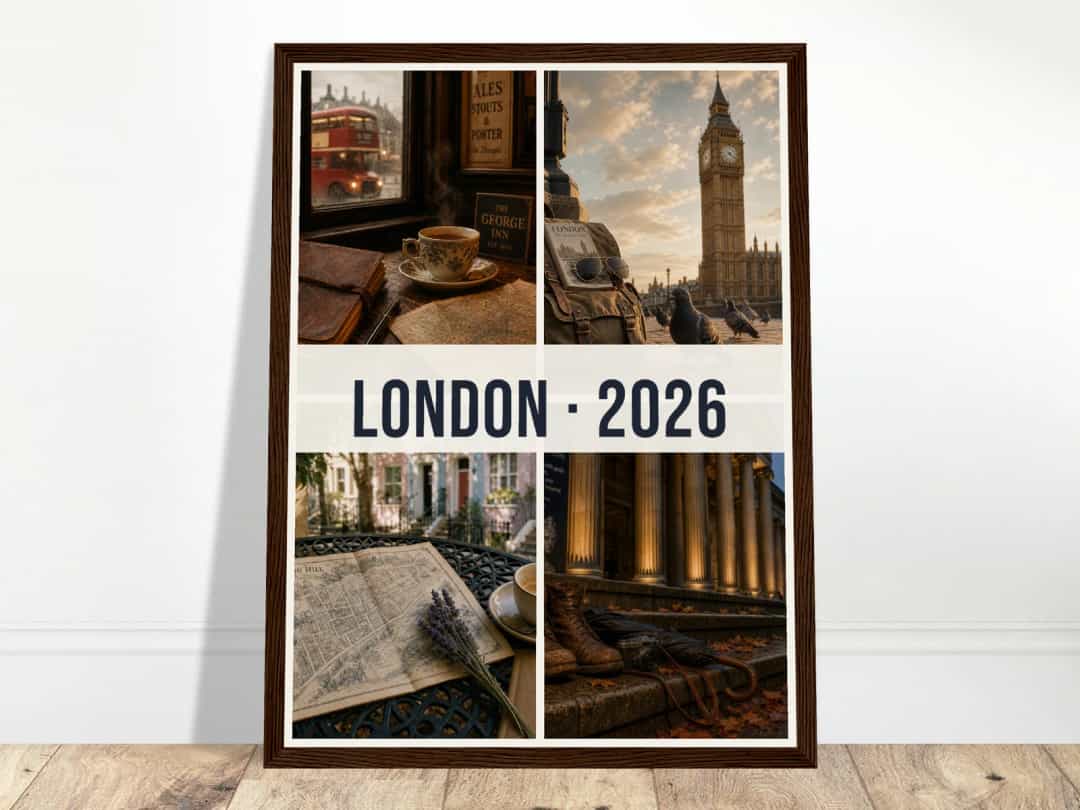
Both frame types can hold a single photo or a collage, and you can add names, dates or a quote. A collage of four to six photos in one frame takes up less wall space than four separate frames. It works particularly well for a trip or a family year.
If you’d rather describe the collage than arrange it yourself, you can make wall art from your photos with AI.
Before You Order
Faces and text: make sure they sit inside the dashed line on a framed poster.
Sharpness: the editor warns you if a photo is too small for its size.
Frame colour: check it against your photo in the 3D preview.
Size: remember that the frame adds a little to the outer dimensions.
The delivery time and cost for your country are shown before you pay.
Make Your Framed Print
Upload your photo, choose a size and frame colour, and the AI lays out the design. Then see it in 3D before you order. Start with a framed poster or a framed canvas in your browser, with no app to install.
FAQ
What’s the difference between framed photo prints on paper and canvas?
A framed poster is a paper print behind plexiglass, with a crisp, classic look. A framed canvas is a textured canvas in a floating wood frame, with no plexiglass over it and a softer, gallery-like look.
Do framed photos arrive ready to hang?
Yes. Both framed posters and framed canvases arrive with hanging hardware in place, so there’s no assembly to do.
Does the frame cover part of my photo?
On a framed poster, the frame’s lip covers about 5 mm along each edge, and the editor marks this with a dashed line. On a framed canvas, nothing is covered.
Which frame colours are available for a photo in a frame?
Framed posters come in black, white, natural wood and dark wood. Framed canvases come in black, natural wood and dark wood.
Can I get a white border around my photo?
There’s no passe-partout, but you can create the same effect on a framed poster by choosing a white background and adding a margin in the editor.