Add emojis to my photo book

When I Started Adding Emojis, My Photo Books Finally Felt Like Me
I realized this in the most low-stakes, slightly embarrassing way possible: I was flipping through a finished photo book full of genuinely great photos - sunsets, birthdays, blurry laughing faces, one excellent cake shot - and it still felt... polite. Nice. Clean. Weirdly quiet.
The pictures were there, but our personality wasn’t.
What was missing wasn’t better photography. It was the emotional glue between the photos. The little commentary. The inside joke. The “this was chaos” energy. The “I was in love with this moment” energy. The “this selfie was a disaster and that’s why I kept it” energy.
Then I started adding emojis.
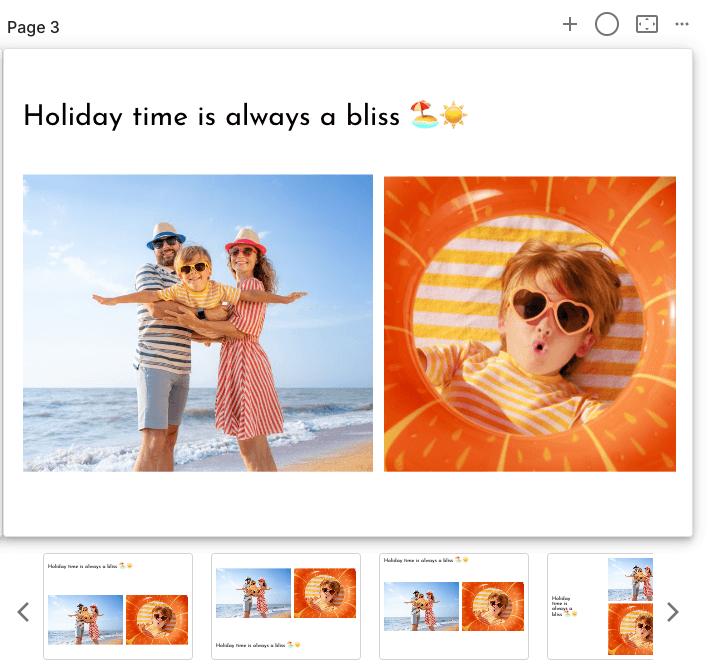
Not everywhere. Not like a phone case designed by a 13-year-old in 2016. Just enough. A 😂 next to a chaotic dinner photo. A 🫠 on the page where I documented assembling furniture at midnight. A 😍 near a golden-hour beach shot that honestly deserved the drama. Suddenly, my pages didn’t just show what happened - they sounded like us.
If you’ve ever wondered whether you can use emojis in your photo book, my short answer is yes, and you probably should - at least a little. It’s one of the easiest ways to make a book feel more personal without needing any design skills at all.
That’s also why I like building these kinds of books with AI photo books from Photo9. When the layouts are generated in seconds and already look polished, I can spend my energy on the fun part - adding the playful details that make the book feel alive.

Why Plain Photo Books Sometimes Feel a Little Flat
I don’t mean flat as in boring. I mean flat as in emotionally under-captioned.
A traditional photo book can look beautiful and still miss the tone of the memory. That family dinner photo might technically be lovely, but if the actual memory was spilled juice, someone crying, someone laughing too hard, and garlic bread nearly catching fire, then the polished layout alone doesn’t tell the truth.
That was my issue.
My earlier books were organized and tasteful. But they felt more like evidence than memory. They documented events without capturing the vibe. Once I noticed that, I couldn’t unsee it.
Emojis turned out to be a tiny fix with a surprisingly big effect. They work like visual side comments. They whisper the feeling that the photo alone can’t fully say.
"Emojis can increase the emotional clarity of digital messages by adding nonverbal cues that text alone may miss." - Frontiers in Psychology
That idea carries over to printed memories too. A photo catches the scene. An emoji can hint at the emotion you were actually living through.
The Aha Moment: Emojis as an Emotional Layer
My turning point was a travel spread. I had this beautiful sunset photo on one side, and on the other side, a deeply unflattering selfie where I looked windblown, sunburned, and spiritually defeated. The page was nice, but it felt incomplete.
So I added a heart-eyes emoji near the sunset and a skull emoji near the selfie.
That was it. That was the moment.
The page suddenly had rhythm. It had contrast. It had a point of view. It felt like a person made it, not just a template.
That’s the thing I now love most about photo books with emojis: they let you react inside the memory. Not in a loud way. Just enough to say, “Here’s what this moment felt like from the inside.”
What Worked for Me - and What Looked Terrible
I definitely had an overexcited phase.
At first, I treated emojis like confetti. Every page got something. Some pages got too many things. It was... not elegant. A page can go from playful to cluttered very fast.
Here’s what I’ve found works better now.
I Use Emojis Like Seasoning, Not Wallpaper
One or two well-placed emojis can do more than ten random ones.
If the photo is already busy, I keep it restrained. If the layout is clean and minimal, a single emoji can add exactly the right wink. I’ve found that the best pages usually have one focal image, one emotional cue, and enough breathing room around both.
I Never Cover Faces, Hands, or the “Action”
This sounds obvious, but I learned it the annoying way. If an emoji blocks the expression that made the photo worth printing, it’s doing the opposite of helping.
Now I place them in corners, in negative space, or near captions - close enough to comment, not so close that they hijack the image.
I Match the Emoji Mood to the Book Mood
A sleek anniversary book and a chaotic friend-trip book should not use emojis the same way.
For minimalist books, I keep emojis smaller and more selective. For scrapbook-style books, I’ll go bigger, funnier, and a little more obvious. A baby book gets soft hearts, sleepy faces, tiny stars. A friend-group book can absolutely handle a dramatic 🫠 or a perfectly timed 🙃.
Running Jokes Make the Whole Book Better
This might be my favorite trick.
If one person in your family is always late, or one friend always cries laughing, or your dog always looks offended in photos, using the same emoji as a recurring callback makes the book feel intentional and hilarious. It becomes part memory book, part private language.
Where Emojis Shine Most
Some books benefit from this more than others, and I’ve definitely noticed patterns.
Photo Book Type | Why Emojis Work So Well | Emoji Energy |
|---|---|---|
Travel books | They capture the contrast between dreamy moments and ridiculous mishaps | 😍🫠🌧️😂 |
Baby’s first year | They soften milestone pages and make everyday chaos feel sweet | 🥹🍼💤💛 |
Couple albums | They add warmth, teasing, and personality without making pages too formal | ❤️🥰😘✨ |
Friend memory books | They turn inside jokes into visual callbacks | 😂💀🙃🎉 |
Pet albums | Honestly, pets and emojis are a perfect match | 🐾😴😎🤨 |
If I had to pick the best category, I’d say travel books and friend-group books win. There’s just so much room for contrast: beauty and disaster, glamour and nonsense, “look at this view” and “look at me losing my mind in airport security.”
My Favorite Kinds of Pages to Emoji-ify
The “This Was a Mess” Page
These are gold. Delayed trains, burnt pancakes, kids covered in paint, tents collapsing in the rain. The photo is already funny, but the right emoji makes it land instantly.
The “This Was Weirdly Beautiful” Page
Sometimes a photo is almost too pretty. It risks becoming generic. A tiny emoji - something affectionate, amazed, or slightly dramatic - makes it feel more personal and less like a stock postcard.
The “Inside Joke” Page
These are the pages people linger on. Not because they’re the most visually perfect, but because they feel the most alive. When someone flips through and says, “That is so you,” that’s the page working.
Reactions Are Different - and Better
This part surprised me more than it should have.
When people look through a traditional photo book, they usually say some version of “These are beautiful.” Which is nice. I’m not dismissing nice.
But when they flip through a book with thoughtful emoji touches, they react more. They laugh sooner. They point. They repeat stories. They get pulled into the memory instead of just observing it.
That difference matters.
The best compliment I got was from a friend who looked through one of mine and said, “This feels like your group chat became a real book.” Exactly. That’s the energy.
"People respond more strongly to visual content that conveys emotion quickly and clearly." - Nielsen Norman Group
That’s basically what emojis do in a photo book. They speed up recognition. They make the emotional read immediate.
If You’re Wondering How to Add Emoji to My Photo Book, Here’s My Real Answer
Not the technical answer. The actual answer.
I start with the photos first. Always. The story still matters more than the decoration. Then I look for the moments that already have a strong emotional tone - chaos, tenderness, awe, embarrassment, pride, silliness. Those are the places where an emoji can amplify what’s already there.
Then I hold back a little.
That restraint is the whole game. If everything is emphasized, nothing is.
This is also where Photo9 helps more than I expected. Because the platform handles the heavy lifting - sorting, suggesting layouts, generating polished designs, showing everything in a 3D preview - I’m not drained before I get to the fun part. I can make a professional-looking book without design experience, then tweak it with my own voice. That balance is ideal.
If I’m making something more giftable, I’ll often start with a themed format like a birthday party photo book and then add emojis sparingly to keep the pages personal instead of overdesigned.
A Few Casual Rules I Now Swear By
If the Photo Is Emotional, Don’t Force a Joke
Not every page needs irony. Some pages want softness. A baby sleeping on your chest does not need a clownish reaction. A tiny heart or sleepy face? Maybe. A screaming-laughing emoji? Absolutely not.
If the Photo Is Already Funny, the Emoji Should Support the Joke
I try not to explain the joke with the emoji. I just underline it. There’s a difference.
Keep Size Consistent Within a Spread
This is one of those small choices that makes the whole book look more intentional. Random size jumps make pages feel messy unless that chaos is clearly the point.
Leave Some Pages Completely Clean
A book full of emoji on every spread loses impact. The quiet pages make the playful ones pop.
Can I Use Emojis in My Photo Book Without It Looking Cheap?
Yes - if you treat them like design accents, not stickers dumped from a bucket.
That’s the real distinction.
Done badly, emojis can make pages feel juvenile. Done well, they make them feel human. The difference usually comes down to placement, consistency, scale, and restraint. If the base book design is clean and high quality, emojis feel playful rather than sloppy.
That’s another reason I’d rather start with a strong foundation: premium paper, smart layouts, clean typography, good spacing. With Photo9, you get that polished structure fast, plus full customization if you want to adjust backgrounds, text, or image placement. So even if your vibe is playful, the finished book still feels gift-worthy.
And if you’re building something more timeless, a hard cover photo book gives that extra sense of permanence - the kind of book that can handle humor and still look beautiful on a shelf years from now.
What My Photo Books Feel Like Now
This is the biggest change: I revisit them more.
Before, my books were lovely objects I was glad I made. Now they feel like something closer to the actual memory - messy, affectionate, funny, specific. They don’t just archive what happened. They preserve how it felt to be there.
That’s a bigger difference than I expected from something as small as an emoji.
So if your pages look good but still feel like they’re missing your voice, this might be the easiest fix. Not a redesign. Not a whole new system. Just a layer of personality.
A little laughter. A little drama. A well-earned 🫠.
Final Thought: Small Detail, Big Personality
If I were starting from scratch, I wouldn’t ask “can I use emojis in my photo book?” anymore. I’d ask where they can add the most feeling without taking over the page.
That’s the sweet spot.
And if you want to create that kind of book without spending hours dragging photos around, Photo9 makes the process feel refreshingly light. You can create from any device, skip the app download, let AI generate beautiful layouts in seconds, fine-tune everything visually, preview it in 3D, and order with confidence thanks to premium materials, secure payment, reliable delivery, and a 100% satisfaction guarantee. Add local printing, recyclable packaging, and sustainably sourced materials, and it feels like the rare modern tool that’s both smart and thoughtful.
For me, that means less time designing and more time making the book feel like us. Which is the whole point.
FAQ
How do I add emojis to my pictures?
Add them as small visual accents after your main photos are already placed. The best approach is to use emojis to highlight the feeling of the moment - like laughter, chaos, or affection - without covering faces or important details.
Can you use emojis in your book?
Yes, you absolutely can. In fact, photo books with emojis often feel more personal because they add humor, emotion, and inside jokes that standard layouts sometimes miss.
How do I insert a 👍 emoji?
You can add emojis directly on your keyboard like when texting with your friends. Photo9 supports native emoji’s in all different skin tones. Keep it small and intentional so it complements the page instead of dominating it.
Can I add text to a photo book?
Yes, and text works beautifully alongside emojis. A short caption plus a well-placed emoji can create a stronger visual narrative and make the page feel more like your real memory.
How do I create custom emojis for photos?
You can add emojis directly on your keyboard like when texting with your friends. Photo9 supports native emoji’s in all different skin tones. What matters most is keeping the style consistent with the vibe of the book, whether that’s minimalist, romantic, playful, or scrapbook-like.